
The smart Trick of How Mental Health Affects The Brain That Nobody is Discussing
The stigma might be dissipating, however, as more individuals share their stories. Toms Shoes founder Blake Mycoskie was identified with mild depression five years ago, a revelation he made public for the very first time in June at the Society for Personnel Management 2019 Annual Conference & Exposition. He plans to release a self-help toolkit next year "to assist people live their best lives." "I think you can not take care of others until you take care of yourself," Mycoskie said at the conference.
Britain's Prince William raised his behavioral health battles and the importance of seeking help at the World Economic Forum in Davos earlier this year. His sibling, Prince Harry, is dealing with Oprah Winfrey on a documentary series about psychological health. And last year's suicides of chef and TELEVISION host Anthony Bourdain and designer Kate Spade highlighted the need to speak about and deal with such conditions prior to tragedy strikes." We're in a minute," Kramer states, "and we can't let it pass." Covered by the LawMental health conditions are covered under the Americans with Disabilities Act.
Nevertheless, workers should want to divulge their need for adjustments. Myriad laws protect medical personal privacy, and professionals state individuals don't have to supply extensive details about their conditions." We don't need to understand that you choose treatment or you're on a certain quantity of drugs," states Jill Vaslow, handling director of international advantages and wellness at Cigna.
However when supervisors know that the person is dealing with a psychological health problem, they may have the ability to change the staff member's schedule or permit the individual to work Look at this website from house, for instance - how gambling affects mental health." If we don't understand anything, we simply know that you aren't doing your job," Vaslow says. Companies are training their staff members to be delicate to signs of psychological health problem, such as noticing modifications in someone's habits.
Sometimes staff members get the conversations began. Kramer became a psychological health awareness supporter after his daughter tried to kill herself as she struggled with an eating disorder. When he began sharing his story with associates, Kramer discovered that many had their own experiences with behavioral health. Those discussions caused a groundswell to find methods to help workers and their families resolve mental health issues.
Everything about How Bullying Affects Mental Health
Numerous have actually been trained on how to spot indications of issues among their staffs and to bring up the subject with those who might be injuring. This year, J&J's human resource professionals and managerial-level personnel will also learn how to find prospective signals and provide assistance." Our staff members came out of the woodwork to help fix the system," Kramer says.
Support SystemsNearly five years back, a staff member at Denver-based building company RK Mechanical took his own life, stunning the business and pressing it to highlight the value of mental health to its employees. "We chose to make it a concern," says Gretchen Meyer, vice president of human resources for the firm - how diet affects mental health.
That's since males are usually less most likely to discuss their health and feelings than females. In addition, numerous building workers are previous military service members who may battle with post-traumatic stress condition tied to their battle experiences. RK took a multipronged method to highlighting the importance of psychological health, consisting of hiring two wellness counselors and promoting making use of mantherapy.org, a site that uses humor to educate males about mental health and directs them to more resources.
They take some time to learn more about the employees personally, asking concerns about their lives and being delicate to changes in their temperaments. "We want the security officials engaged," Meyer says. "We want them out there stating, 'How are you today?' 'How can I help?' "RK schedules routine lunch conversations about mental health subjects, and signs around the workplace remind staff members about the EAP. how unemployment affects mental and physical health.
" You wish to provide people as many methods to get assist as possible." Discovering the right technique to deliver the message is essential, as Garmin's leaders found. When it was preparing to release a campaign highlighting psychological health in 2016, the company discovered that the subject trended poorly with some employees, particularly Child Boomers, states Haley Prophet, senior well-being professional at the firm.
How The Environment Affects Mental Health Fundamentals Explained
So Garmin decided to focus on the same concerns using a banner of "resilience." For example, the personnel established "Experiences in Durability: The Amazing Workbook," which utilizes a graphic-novel format to discuss psychological health. The extremely male personnel enjoyed it. Garmin likewise holds regular discussions on psychological health subjects that focus on the science Visit this page behind the conditions.
She includes that the approach specifically interest the business's engineers, who make up 65 percent of the workforce. At the psychological health conversations, Prophet states, some employees will get up and inform stories about their own conditions. "We're seeing more conversations and a culture shift," she states. "Individuals are https://5e81fc76e13d4.site123.me/#section-5f7838a32f83e standing up to be supporters and saying they're not ashamed to speak about mental disorder." Theresa Agovino is the work environment editor for SHRM.Explore FurtherSHRM provides resources to help companies more effectively accommodate mental health issues in the work environment.
Anxiety, bipolar disorder, anxiety disorders and other mental health impairments can rise to the level of impairments under the Americans with Disabilities Act and thereby require employers to make accommodations for workers with such conditions. Addition initiatives need to factor in depression, anxiety and other mental health problems. Mental health problems are more prevalent among the labor force than employers may understand, and, for numerous workers, work is a consider the psychological health signs they experience.
An employer-sponsored worker help program is a work-based intervention offering developed to recognize and assist staff members in resolving personal problems that might be negatively impacting their efficiency at work, such as marital, financial or emotional problems; family concerns; or substance or alcohol abuse - how funding affects community mental health programs.
It's crucial to have open conversations about psychological health at work and consider changes, lodgings and assistance requirements for those who are handling psychological health concerns. This area covers guidance, recommendations and appropriate BBC support services (consisting of the EAP service).
Things about How Snapchat Affects Mental Health

If you are fretted about your mental health, you ought to try and look for assistance early. The initial step is to visit your GP and discuss how you feel. GPs are experienced in dealing with psychological health problems, so attempt to be open about how you have actually been feeling. You might find it hard to talk about personal problems, or struggle to discover the words to explain how you feel.
Ask your GP for a double consultation. This will offer you more time to talk with the physician. Take a pal or relative to the visit. They can assist you to describe things to the GP. Jot down what you want to say before the appointment. You could likewise make notes of your signs and questions you want to ask.
Social care needs can include requiring aid with: leaving your house, preparing meals or shopping, handling your money, and having social contact with family and friends. You can ask your local authority for a social care evaluation to examine your needs - how snapchat affects mental health. Your regional authority needs to do this if you may require care and support.

Getting The How Social Media Affects Mental Health Essay To Work
You do not require to be enrolled in VA health care to get care. If you need support for a specific mental health problemor if you're having problems sleeping, managing your anger, or readjusting to civilian lifeyou are not alone. And we can assist. Over 1.7 million Veterans got psychological health services at VA last year.
Our objective is to help you organize your treatment and live a complete and meaningful life. ask your primary care service provider to assist you make an appointment with a VA psychological health supplier. call your closest VA medical center or Veterinarian Center to speak about your needs. You can call 877-222-8387 to discover the best resources for your requirements.
We're here Monday through Friday, 8:00 a.m. to 8:00 p.m. ET. Yes. You may have the ability to utilize one or more of the care options noted below. You can utilize this website's tools to assist handle your anger, develop parenting and analytical skills, and more. The tools are based on proven mental health practices that have successfully assisted other Veterans and families.
We've partnered with the Department of Defense (DoD) to produce free smart device applications you can utilize to assist manage your physical and psychological health. These consist of apps to help you handle tension, quit cigarette smoking, and more. You can get in touch with a VA mental health service provider through a computer system or mobile gadget in your house or at your nearby VA health center.
Yes. The peer help program, in partnership with Military OneSource, uses support to service members (including National Guard soldiers and Reservists), their families, and transitioning Veterans up to 365 days after separation or retirement. Through this program, you can talk privately with peer coaches who are Veterans, service members, or military spouses.
This service is available 24 hr a day, 365 days a year. you can check out among our Vet Centers to get totally free individual and group counseling for you and your family. You can access these services even if you're not enrolled in VA healthcare and aren't receiving disability settlement.
you can visit our Make the Connection website. This site links millions of Veterans, and their member of the family and pals, to regional VA and community mental health resources. Check out the site to gain access to these recommendation resources and hear Veteran testimonials of strength and healing. Get the answer to other concerns you may have about our services.
Some Known Facts About What Is Good Mental Health.
Most companies acknowledge that healthy employees who get help when they require it are more efficient and reliable in their tasks than those who aren't performing Click here to find out more at their best due to the fact that they're not feeling well. Do I require to be registered in VA health care to gain access to mental health care? No.
Call our basic VA hotline at $1800-827-1000 to learn what your care choices might be. We're here Monday through Friday, 8:00 a.m. to 9:00 p.m. ET. Get complimentary personal counseling, https://transformationstreatment1.blogspot.com/2020/08/substance-abuse-treatment-in-south.html alcohol and drug evaluation, and other support for battle Veterans and households at one of our 300 neighborhood Vet Centers.

A trained VA therapist will provide details about VA homelessness programs, health care, and other services in your location. The call is totally free and private. Call or visit your regional VA Community Resource and Recommendation Center. Even if you do not receive VA health care, our staff can help you discover non-VA resources you may receive in your community.
Am I eligible to utilize VA mental health services? To find out more about whether you're eligible for services, call your closest VA medical center. Or call $1877-222-8387 to discover the best resource for your needs. If you have hearing loss, call TTY: 800-877-8339. We're here Monday through Friday, 8:00 a.m.
ET. For how long will it consider me to begin getting help once I call VA? You'll start receiving help the day you reach out to us. We offer same-day services to make certain we can either address your mental health requirements or schedule the right follow-up care right away.
Fulfilling face-to-face with a VA healthcare provider (consisting of walk-in visits at a center or immediate care center) Having a telehealth or video care appointment with a VA company Talking by phone with a VA nurse who can offer medical advice (called "nurse triage") Communicating with a VA service provider through Secure Messaging Scheduling a future consultation Getting a prescription filled What psychological illness does VA deal with? What Home page type of psychological health services does VA offer? for Veterans with serious or lethal mental disorder for Veterans with severe psychological disease who have a lot of trouble operating in daily life, which may consist of care provided over the phone, for Veterans dealing with a hard time in their lives for Veterans with psychological health problems and other requirements (like those associated to homelessness, job training, and education) who would be finest assisted by getting treatment or living in a structured setting for a duration of time for many common psychological and behavioral problems to assist Veterans join the work force and live well in the neighborhood, through VA medical centers and some regional, non-VA health centers, which uses assistance 24 hours a day, 7 days a week, for Veterans in crisis and their friends and families Does VA offer psychological health resources for family, friends, and caretakers of Veterans? Yes.
You can likewise contact our program to speak straight with a certified psychologist or social employee, totally free of charge. They can supply information about psychological health and VA services, as well as suggestions for how to begin the conversation about treatment with an enjoyed one. How do I discover my closest VA health center? You can likewise get support from resources used by other government departments and community organizations beyond VA (how much does a mental health counselor make).
Things about When Is World Mental Health Day
For support, go to the Military OneSource website or call 800-342-9647 anytime, day or night. The center works to improve the lives of Veterans, service members, and their families by advancing excellence in mental healthcare, preparedness, and avoidance. National Suicide Avoidance and substance utilize resources Neighborhood psychological health resources NAMI builds much better lives for countless Americans impacted by psychological disease by supplying education programs for families and individuals dealing with psychological illness.
This company supporters for policies that promote mental health and the rights of individuals dealing with psychological illness. They likewise offer education and connections to mental health resources.
Your mental health is a vital component to your general wellness. If you are experiencing mental health challenges, or presume a household member would take advantage of talking to a psychological health company, VA uses ways to assist. Veterans and their member of the family can link with assistance through in-person consultations at local VA facilities, telehealth sessions, and online resources.
From anxiety, to depression, to posttraumatic stress, there is a wide variety of conditions that can impact your mental health. These pages will stroll you through psychological health conditions and other psychological health topics, and overview programs and services that remain in place to help. Explore self-help tools, or download a screening list to see if typical symptoms apply to you or a liked one.

See This Report on What Can Affect A Person Mental Health
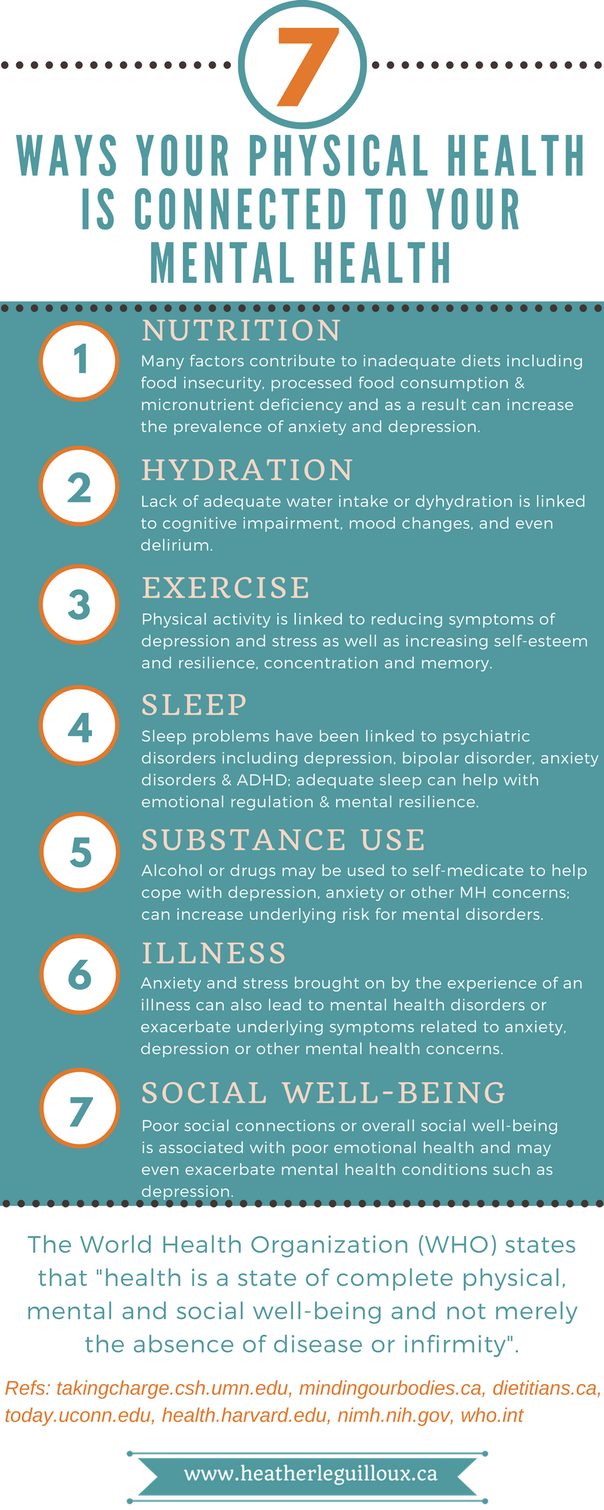
Exercise can be extremely reliable in easing tension. Research on used grownups has discovered that highly active people tend to have lower tension rates compared to people who are less active. Workout not just has a favorable effect on our physical health, but it can also increase our self-esteem.
It is an essential indication of our psychological health and wellbeing and our ability to manage life stressors. Exercise has actually been shown to have a positive influence on our self-confidence and self-respect. This relationship has been discovered in kids, teenagers, young people, grownups and older people, and across both males and females.
Together with this boost in life span, there has been an increase in the number of individuals living with dementia and in individuals with cognitive decrease. The primary sign of dementia is amnesia; it is a progressive illness that results in individuals becoming more impaired in time. Decline in cognitive functions, such as attention and concentration, also happens in older people, including those who do not establish dementia.
For individuals who have actually currently developed the illness, physical activity can help to postpone further decline in operating. Research studies reveal that there is around a 20% to 30% lower risk of depression and dementia for grownups taking part in day-to-day physical activity. Physical activity likewise seems to lower the probability of experiencing cognitive decline in individuals who do not have dementia.
It can be utilized as a standalone treatment or in combination with medication and/or psychological therapy. It has few side results and does not have the preconception that some people view to be attached to taking antidepressants or going to psychotherapy and counselling. Exercise can decrease levels of stress and anxiety in people with mild signs and may also be practical for treating clinical anxiety.
For more information about how exercise can assist increase health and wellbeing and prevent or handle mental illness, read our full report, or get more information about how exercise can improve your psychological health on our site: www.mentalhealth.org.uk. We understand all too well that that many individuals in the UK do not meet the current exercise standards.
The Department of Health recommends that adults need to intend to be active everyday and total 2.5 hours of moderate strength activity over a week the equivalent of thirty minutes five times a week. It might sound like a lot, but it isn't as daunting as it first appears, and we have lots of recommendations to help you start.
What Constitutes A Mental Health Crisis - Questions
Apart from enhancing your physical and psychological wellness, what else do you desire to get out of being active? Ask yourself whether you 'd choose being indoors or out, doing a group https://damienafbb995.hatenablog.com/entry/2020/09/26/184310 or private activity, or trying a new sport. If you're put off by sporty workouts, or feel uninspired at the thought of limiting yourself to simply one activity, think outside package and keep in mind that going on a walk, doing housework, and gardening are all exercises.
It can be a bit scary making changes to your life, and the majority of people get nervous about attempting something brand-new. Some typical barriers, such as cost, injury or health problem, absence of energy, worry of failure, or perhaps the weather can prevent people from getting going; nevertheless, useful and psychological support from good Learn more here friends, household and experts actually does assist.
Individuals who are nervous about how their body will aim to others while they are working out might prevent workout as an outcome. For ladies, attending a female-only exercise class or a ladies-only swimming session may help to conquer anxiety as a barrier to initially beginning to exercise. Exercising with a companion can likewise help to decrease anxiety about how your body seeks to others, and may be particularly valuable during the first couple of workout sessions.
What time do you have offered for exercise? You may need to rejig commitments to make room for additional activities, or select something that fits into your hectic schedule. Will you need support from pals and family to Drug Abuse Treatment complete your picked activities, or is there a possibility your active way of life will have an effect on others in your life? Find out just how much it will cost and, if necessary, what you can do to make it economical.
Embracing a more active lifestyle can be as easy as doing daily jobs more energetically or making little changes to your routine, such as walking up a flight of stairs. If physical activity is brand-new to you, it's best to develop your capability gradually. Concentrate on job objectives, such as enhancing sport abilities or endurance, rather than competition, and keep a record of your activity and review it to provide feedback on your development.

It's actually crucial to set objectives to determine progress, which might encourage you. Attempt using a pedometer or an app on your smart device to measure your speed and range travelled, or add on an extra stomach crunch or swim an additional length at the end of your session. Keep in mind, you will not see enhancement from physical conditioning every day.
There are lots of activities you can do without leaving your front door which involve minimal cost (how to become a qualified mental health professional). It can be as simple as pressing the mower with additional vigour, speeding up the housework, or doing an exercise DVD in the living-room. Whether you're on your feet, sat at a desk or sat behind the wheel throughout your working hours, there are numerous methods you can get more active.
The How Does Music Affect Mental Health Ideas
The change of surroundings will do you great, too. Running out doors is a prime-time show for improving your activity levels, and research recommends that doing exercise in an outside, 'green' environment has greater positive results on wellness compared to physical activity inside your home. Making little changes, from leaving the car in the house for short journeys or getting off the bus a stop earlier, to higher-intensity activities like participating with your children's football game or running with the canine, can help to enhance your mood.
The tools are offered here: www.nhs.uk. Outdoor fitness centers are health clubs where some gym equipment is offered in outside areas for people to use for free: www.tgogc.com. The British Heart Foundation's 'Health at Work' website offers further recommendations and some resources to get going with promoting physical activity at work. Paluska, S.A.
( 2000 ). Exercise and Mental Health: Current Ideas. Sports Medication, 29 (3 ), 167180. World Health Organization (2010 ). International suggestions on physical activity for health. World Health Company: Switzerland. Ekkekakis, P., Hall, E.E., Van Landuyt, L.M. & Petruzzello, S. (2000 ). Walking in (affective) circles: Can short walks enhance impact? Journal of Behavioral Medicine, 23 (3 ), 245275.
& Stoll, O. (2000 ). Effects of Physical Workout on Self-Concept and Health and wellbeing. International Journal of Sport Psychology, 31, 4765. Salmon, P. (2001 ). Results of Physical Activity on Stress And Anxiety, Depression, and Level Of Sensitivity to Tension: A Unifying Theory. Medical Psychology Evaluation, 21 (1 ), 3361. Zschucke, E., Gaudlitz, K. & Strohle, A.

How Beauty Standards Affect Mental Health American Psychological Association for Dummies
Workout promotes our brain to release "feel-good chemicals," such as endorphins, serotonin, dopamine, norepinephrine, and more. These chemicals, as an entire, improve our mood, increase our sense of wellness, improve our cravings, increase our sleep quality, and more. They can likewise help our bodies balance stress hormones, helping us cope with tensions and minimize the hormonal agents and chemicals that ruin our state of mind and frame of mind.
Just as workout can be used to enhance the state of mind of somebody who already has good mental health, it is an extremely crucial tool in the battle versus anxiety. One research study really discovered that workout is just as effective as SSRIs (a type of antidepressant) at assisting people manage depression.
The very same research study discussed above discovered that it takes in between 4 and 6 weeks for the impacts of the exercise to really affect depression, and the peak of effectiveness occurs after about 10 weeks of constant workout. People ought to go for 30 to 60 minutes of exercise, 3 to 5 times each week.
There is not a set type of workout that is deemed most efficient, as aerobic exercises (such as biking or running) and strength training have all seemed to work pretty uniformly throughout the board. While even low amounts of workout will cause improvements in anxiety, the more workout, the much better.
These are chemicals that, merely put, make you rejoice. Endorphins, specifically, are our body's own natural pain-killers. They can actually remove physical and emotional discomfort from our bodies by essentially flushing them out with these feel-good chemicals. Serotonin in fact promotes and produces pleasure and joy within our bodies. In truth, low levels of serotonin have actually been discovered in those with persistent depression.
Dopamine assists to control motivation, memory, reward, and attention, which is why it is carefully connected to exercise and the psychological health benefits it brings. When all of these chemicals are launched during an exercise, we experience almost immediate state of mind enhancements, reduced stress levels, and a more favorable outlook. We progress equipped to handle tension and other unfavorable emotions like anger or sadness, and as our brain adapts to these beneficial changes, it actually gets much healthier and functions more efficiently, improving our general mental, psychological, and physical health.
Facts About What Is Mental Emotional Health Uncovered
Dr. Shawna Charles, who received a PhD in Psychology from Walden University, put her love of psychology into action by opening a Los Angeles boxing gym to supply individuals with the aid they need, including fitness, an ear to listen to their issues, and a connection to vital social services.
Charles, like lots of others in her field, comprehends the connection between excellent physical and psychological health. Many of us know the numerous physical advantages of exercise: weight control, lower blood pressure, decreased threat of diabetes, and increased energy, just among others. However what about the psychological advantages of exercise? From relieving symptoms of anxiety and stress and anxiety to keeping your memory sharp, there's no scarcity of mental advantages of exercise.
Find out more about Walden's online BS in Psychology degree program. Exercise is a clinically shown state of mind booster, decreasing signs of both anxiety and stress and anxiety. Physical activity kicks up endorphin levels, the body's well-known "feel good" chemical produced by the brain and spine cord that produces sensations of joy and bliss.

Another psychological benefit of workout is decreased tension levelssomething that can make us all better. Increasing your heart rate can actually reverse stress-induced mental retardation by promoting the production of neurohormones like norepinephrine, which not just improve cognition and mood but improve thinking clouded by difficult occasions. Workout also forces Article source the body's main and sympathetic worried systems to communicate with one another, improving the body's total capability to react to tension.
All those accomplishments can all add up to a whopping increase of self-esteemand the confidence that includes it. You might not set out for better-fitting clothing, a slimmer body, and the capability to climb a hill without getting winded. Oftentimes it occurs before you even recognize it. It's simply one of the lots of benefits of physical activity that enhance your body, mind, and spirit.
Physical activity increases body temperature level, which can https://goo.gl/maps/jU4yu8rRfSxK16kW9 have relaxing effects on the mind, leading to less sheep counting and more shuteye. Workout likewise assists regulate your body clock, our bodies' built-in alarm clock that manages when we feel tired https://www.google.com/maps?cid=10060561494877950286 and when we feel alert. (Although enhanced sleep is a mental benefit of exercise, sleep professionals recommend not exercising near to bedtime.) From constructing intelligence to strengthening memory, exercise increases mental capacity in a variety of methods.
Some Ideas on What Constitutes A Mental Health Crisis You Need To Know
It likewise avoids cognitive decline and memory loss by enhancing the hippocampus, the part of the brain responsible for memory and knowing. Studies likewise prove that exercise improves imagination and mental energy. So if you need inspiration, your huge idea might be just a walk or jog away.
Even if you work full-time, a bachelor's in psychology is something you can accomplish. Featuring a flexible, socially mindful knowing environment, Walden University makes greater education possible in an online format that fits your busy life. Find out how you can assist others with an online BS in Psychology from Walden.
We understand that routine exercise is necessary for maintaining a healthy body and for minimizing the risk of developing chronic diseases, like heart problem and diabetes. Remarkably, the significance of workout in keeping a healthy mind is also ending up being a growing number of clear. Exercise is now being recommended by physicians as a part of treatment for a variety of mental health problems, including anxiety and stress and anxiety.
You have actually heard it all prior to; leave your phone, stop enjoying TELEVISION, and go play outside, you sofa potato! Are your parents and teachers just losing their breath, or is there really some science behind this advice? Let us take a look at some of the amazing research study on how can enhance both physical and.
Exercise has actually also been shown to help avoid and handle numerous chronic diseases, such as diabetes and cardiovascular disease - what is mental emotional health. Those are the advantages of exercise that you have most likely currently become aware of. But how does your mind feel after you exercise? Do you feel better? Can you think more clearly? Do you find it much easier to fall asleep? Have a think about it and we will return to this.
This kind of health problem is called. Similar to the expression "cardiovascular disease" is used to describe a group of diseases that affect the heart, you can think about mental disorder as broad term used to explain illness that impact the mind. Mental disorder includes a variety of conditions you may have become aware of, including depression and stress and anxiety.
What Does What Are The Legal Rights Of A Person Admitted To An Inpatient Mental Health Facility? Do?
In some cases the bad sensations do not go away and can start to effect important parts of our lives, such as the ability to carry out at school or at work. Because we can not see psychological illness in rather the very same method that we see physical illness or injury (like a broken leg), people often find mental disorder hard to speak about.

The 10-Minute Rule for Why Can't I Cry Anymore Mental Health
The information and materials contained on this website are not meant to constitute an extensive guide worrying all aspects of the therapy, item or treatment described on the site. All users are urged to always look for guidance from a registered healthcare professional for medical diagnosis and answers to their medical questions and to determine whether the specific treatment, service, item or treatment explained on the website is appropriate in their scenarios.
You already know how great exercise is for your physical health. But you might be surprised by how good exercise is for your psychological health. Studies reveal that for treating mild-moderate anxiety, workout can be as reliable as talking therapy and medication. There are numerous manner ins which work out positively influences your psychological health: Promotes the release of feel-good chemicals in your brain, like endorphins and serotonin.
Offers you a sense of achievement as your physical fitness enhances and you begin attaining your goals. Exercise is usually a shared activity with others so you get the added advantages of social connection. To enjoy these advantages, it's normally advised you do 30 minutes of 'vigorous' workout a minimum of five times a week.
Do not get discouraged if these guidelines feel unachievable (how long does mental health first aid certification last). It is very important to keep in mind that while more workout is much better than less any exercise is better than no workout. Of course, the hardest part is starting. Particularly if you're experiencing a mental health condition like depression, where the concept of just rising can appear hard enough.
7 Simple Techniques For How To Take Care Of Mental Health
If you're waiting for motivation to reach your doorstep before you begin working out, you might be waiting a long time. The secret reality of inspiration is that it in fact follows you act not before. By starting small and experiencing some benefits, you offer motivation a possibility to turn up and it enjoys riding on the momentum you're building.
you're most likely to stick to a new behaviour if it's connected to something you truly value in life. Ask yourself, "why will exercise make my life better in a meaningful method?" It might be to help you conquer anxiety and get your life back on track, to acquire more energy for your kids or to improve your basic health for a longer life.
Just include 5 percent to what you're presently doing. If you're stuck on the couch, simply walking in your street every day is an excellent start. the more decisions you have to make about when to work out, the closer you'll pertain to deciding not to. Schedule your exercise into your weekly schedule so you aren't relying as much on determination.
If you dislike running or going to the health club, you're not likely to keep it up. Discover an activity you delight in (or at least do not dislike) and you're most likely to keep doing it. it's very satisfying to track your progress towards a specific objective. It makes every exercise session feel purposeful.
8 Easy Facts About Who Can Bill Medicare For Mental Health Services Explained
Most notably, respect yourself if you have not exercised for a while. For many, this can You can find out more set off self-critical ideas that cause providing up the exercise regular totally. Treat every day as a fresh start, and advise yourself that it's human to drop the ball sometimes. Was this short article useful? Your feedback will help us improve our material (how to help mental health).
There are numerous factors to exercise, like staying healthy or reducing weight. But did you know that workout also assists your emotional and mental health? Exercise is a really effective "drug" because it does naturally what lots of scientists in the pharmaceutical world have actually been developing for years. Below are a few of the many advantages of the physiological return on workout.
Heading to the gym or working out on your home health club devices can have a robust release on certain stress chemicals that assist the brain moderate stress. Likewise, when putting the body under physical stress routinely, this teaches the body how to recuperate and adapt to tension both physically and mentally.
The body recuperates at night when we sleep; this is the most extensive impact of recovery from training sessions. Without sleep, you will not advance really far in your quest for fitness. Thankfully https://ephard9jt8.wixsite.com/sergiopxte441/post/h1-styleclearboth-idcontentsection0facts-about-how-to-advocate-for-mental-health-uncoveredh1 your brain has your back on this one. Workout can increase the release of "pleased chemicals" called endorphins, which act in a comparable style as pain medication communicating with your brain's neurotransmitters.
Some Known Questions About What Does A Mental Health Counselor Do.
These endorphins launch naturally by exercise and have actually been revealed to minimize depression and boost feelings of "bliss" post-workout. In addition, exercising outdoors can likewise provide you a boost of happiness. Lots of factors make this a terrific advantage from workout. To begin with, your social abilities get a "exercise" resulting in more confidence in and out of the fitness center.
Lastly, you will likewise be improving your favorable self-image and self-talk, all the while increasing the understanding of your self-regard. It has actually been shown that as we age, our cognitive functions tend to decline. Regular workout at any age can impact the part of the brain that acts on memory (hippocampus) and improve its function.
Through the exact same adaptations on the hippocampus individuals that exercise routinely are most likely to keep new information. The function here is extremely comparable to what was discussed above with endorphins. Workout has been revealed to be even more successful at reducing stress and anxiety than a bubble bath, and on the very same level as a Swedish massage.
When we exercise, our blood flow is increased, which assists carry oxygen and nutrients to our muscles and makes us more stimulated and alert. As mentioned above, with enhanced sleep quality comes improved energy because our bodies are getting the rest it requires. Research study shows that individuals who work out regularly are usually more efficient in both work and individual life.
Not known Details About What Is Good Mental Health

Lastly, because people working out are likewise most likely to make healthy nutritional options, they likewise have the perception of more energy and take in less caffeine daily. When individuals start exercising with a pal or partner, they are finding quality time to invest together and keeping each other motivated. In addition, by feeling positive from workout, individuals will look for others with the same interests.
Belonging to a community has a great deal of effect on mental health and success with our goals. Exposing health club members and customers to these advantages of exercise may assist increase their longevity in the health club, in addition to increase the likelihood that they see outcomes and refer loved ones.
With the demands of college life, you might believe you don't have whenever left for workout in your schedule. Or perhaps you hate to exercise because you see it as a task or dull activity. But there are lots of ways to be active and ways to fit exercise into your day.
Exercise promotes chemicals in the brain that improve your state of mind and make you more relaxed. Particularly, the brain releases feel-good chemicals called endorphins throughout the body. Exercise reduces stress and anxiety and depressed mood, and enhances self-confidence. College requires a reasonable amount of energy and lots of mental capacity to stay up to date with classes and other activities.

Rumored Buzz on How Does Stigma Affect Mental Health
The mental health Space Action Program (mhGAP) has actually produced evidence based assistance for non-specialists to allow them to much better determine and handle a variety of priority mental health conditions (what is mental health court). WHO supports governments in the objective of enhancing and promoting mental health. WHO has examined proof for promoting mental health and is working with governments to disseminate this info and to integrate efficient techniques into policies and strategies.
The Strategy is a commitment by all WHO's Member States to take particular actions to enhance psychological health and to contribute to the attainment of a set of worldwide targets. The Action Strategy's general goal is to promote psychological wellness, prevent mental conditions, supply care, improve recovery, promote human rights and reduce the mortality, morbidity and impairment for persons with psychological disorders.
Specific emphasis is given in the Action Plan to the protection and promo of human rights, the fortifying and empowering of civil society and to the central place of community-based care. In order to accomplish its goals, the Action Plan proposes and requires clear actions for governments, international partners and for WHO.
What Are The Special Health Record Requirements For Behavior And Mental Health Records? - Questions
As there is no action that fits all countries, each federal government will require to adapt the Action Plan to its particular national situations.
Great psychological health is connected to psychological and mental well-being. WHO's work to enhance the mental health of people and society at big consists of the promotion of mental well-being, the avoidance of psychological conditions, the protection of human rights and the care of individuals impacted by mental illness. how to have good mental health.
, any disease with significant mental or behavioral manifestations that is connected with either a painful or upsetting symptom or a problems in several essential areas of operating. Psychological conditions, in particular their repercussions and their treatment, are of more concern and get more attention now than in the past.

The Best Strategy To Use For How To Become A Mental Health Nurse
They have actually always prevailed, but, with the removal or effective treatment of a lot of the severe physical illnesses that formerly affected human beings, mental disorder has actually become a more noticeable reason for suffering and accounts for a higher proportion of those handicapped by illness. Furthermore, the public has come to expect the medical and psychological health professions to assist it obtain an improved quality of life in its psychological along with physical functioning.
The transfer of lots of psychiatric clients, some still showing obvious symptoms, from mental hospitals into the community has likewise increased the public's awareness of the value and prevalence of psychological health problem. There is no simple definition of mental illness that is universally acceptable. This is partly due to the fact that mindsets or behaviour that are considered as irregular in one culture might be related to as normal or acceptable in another, and in any case it is difficult to draw the line clearly demarcating healthy from unusual mental functioning.
An overly broad meaning would specify mental disorder as merely being the absence or lack of mental healththat is to say, a condition of psychological well-being, balance, and durability in which the person can successfully work and function and in which the individual can both endure and discover to cope with the disputes and worries encountered in life.
The Ultimate Guide To How To Get A Mental Health Evaluation
Get special access to material from our 1768 First Edition with your subscription. Subscribe today A mental disorder can have a result on every aspect of an individual's life, consisting of thinking, sensation, mood, and outlook and such areas of external activity as household and marital life, sexual activity, work, recreation, and management of material affairs.
The precise research study, observation, and inquiry that characterize the discipline of psychopathology are, in turn, the basis for the practice of psychiatry (i.e., the science and practice of identifying and treating mental illness along with handling their avoidance). Psychiatry, psychology, and related disciplines such as scientific psychology and therapy welcome a broad spectrum of techniques and methods for dealing with psychological health problems.
Another essential group of treatments is the psychotherapies, which seek to treat psychological disorders by mental means and which include spoken communication between the client and a trained individual in the context of a therapeutic interpersonal relationship between them. Different modes of psychotherapy focus otherwise on psychological experience, cognitive processing, and obvious behaviour.
Facts About How Physical Health Affects Mental Health Uncovered
Neurological diseases (see neurology) with behavioral manifestations are treated in nerve system disease. Alcoholism and other substance use disorders are gone over in alcoholism and substance abuse. Disorders of sexual functioning and behaviour are dealt with in sexual behaviour, human. Tests utilized to examine mental health and working are talked about in psychological testing.
Mental health conditions are disturbances in a person's thinking, sensation, or behavior (or a mix of these) that show a problem in mental function. They trigger distress or impairment in social, work, or household activities. how to take care of mental health. Simply as the phrase "physical disease" is used to describe a range of physical illness, the Addiction Treatment Delray term "psychological health problem" encompasses a range of psychological health conditions.
Each year: U.S. grownups experience mental disorder U.S. grownups live with severe mental disorder U.S. youth aged 6 to 17 years experience a mental health illness Severe mental health problem (SMI) is a term used by health experts to explain the most severe psychological health conditions. These diseases significantly disrupt or limit one or more significant life activities.
What Does What Is A Mental Health Clinician Do?
There are numerous mental illnesses noted in the fifth edition of the Diagnostic and Statistical Manual of Mental Illness (DSM-5), the American Psychiatric Association's diagnostic manual. The DSM-5 puts diseases into classifications based on their diagnostic criteria.: This group of psychological illnesses is characterized by considerable sensations of anxiety or worry accompanied by physical symptoms, such as shortness of breath, rapid heart beat, and dizziness.
There are three broad kinds of bipolar disorder: bipolar I, bipolar II, and cyclothymia.: The typical feature of all depressive disorders is the existence of sad, empty, or irritable mood, accompanied by somatic and cognitive modifications that substantially impact an individual's capability to function. Examples include significant depressive disorder and premenstrual dysphoric condition (PMDD).: A group of psychiatric conditions that impact involving issues with the self-discipline of emotions and habits.
Three significant eating conditions include anorexia, bulimia nervosa, and binge-eating condition.: Formerly called gender identity condition, gender dysphoria takes place when an individual feels extreme pain or distress because https://transformationstreatment1.blogspot.com/2020/07/personality-disorders-treatment-delray.html their gender identity is at odds with the gender they were appointed at birth.: These conditions are defined by an obtained reduction in cognitive function.
Indicators on Which Of The Following Mental Health Professionals Is A Licensed Physician? You Should Know
They are defined by problems of individual, social, scholastic, or occupational functioning. Examples consist of attention-deficit/hyperactivity condition (ADHD), autism, and learning and intellectual disabilities.: As the name recommends, these conditions are characterized by the existence of fixations and/or obsessions. Examples consist of obsessive-compulsive condition (OCD), hoarding, and body dysmorphic disorder.: Explains intense or relentless sexual interests that cause distress or problems.
There are currently 10 acknowledged character disorders.: These conditions are defined by abnormalities in several of the following areas: delusions, hallucinations, chaotic thinking, chaotic or irregular motor habits (consisting of catatonia), and unfavorable symptoms.: This heterogeneous group of conditions is characterized by a person's inability to fully participate in or experience sexual enjoyment.

More About How Bacteria In Your Gut Affect Your Mental Health
The next most essential thing you can do is construct and keep a strong relationship with your child's instructors and with the school. If your child has actually been identified with a psychological or behavioral health problem, bring it to the school's attention and ensure they are associated with your treatment strategy.
If the school refuses to work with you or isn't able to provide anything in the way of help, it may be time to try to find another school that much better fits your child's needs. By bringing your pediatrician and your child's teachers together, you can develop a thorough support group for your kid.
Though the roadway might be challenging, your kid depends on you for love and support so do whatever you can to give your child what they require to prosper and grow.
A U.S. Cosmetic surgeon General report indicates that one in 5 children and teenagers will deal with a significant mental health condition during their school years. Psychological health conditions impacting kids and teenagers can vary from attention deficit hyperactivity disorder (ADHD) to autism, anxiety, consuming conditions, schizophrenia, and others. Trainees experiencing these conditions face significant barriers to finding out and are less likely to graduate from high school.
The Best Guide To How Does Culture Affect Mental Health
As leaders work to meet these responsibilities, they face an array of challenges connected to mental health: Schools have actually traditionally utilized their resources to use a significant variety of trainee assistance specialists - how does stress affect mental and emotional health. These school team member have actually been the core around which extensive school-based programs have been developed and executed.
By the 201415 academic year, there was one school counselor for every single 482 students. The suggested ratio from the American School Therapy Association is one school counselor for each 250 students. Information from the U.S. Department of Education Office for Civil liberty suggests that one in five high schools lack a school counselor.
Within a district, various schools need to share school psychologists, school social workers, school nurses, and other customized support workers. This increases the caseload of these psychological health specialists and limitations access to their services for trainees in requirement of assistance and support. While the People with Disabilities Act (CONCEPT) and the Elementary and Secondary Education Act (ESEA) include programs and efforts to deal with extensive support services in schools, since FY 2009 the funding for these programs, including the Safe and Drug-Free Schools and Communities Act (SDFSCA) State and Local Grants Program, has been seriously cut, if not removed.
In FY 2009, the federal programs supporting trainees' mental health and health surpassed $800 million; nevertheless, in FY 2017, Congress was investing just $400 million to support Title IV and the SSAE grant program, less than 25% of its authorized level of $1.65 billion under the Every Trainee Succeeds Act (ESSA).
Fascination About How Does Parental Mental Health Affect Child Development
For regrettable historic and cultural factors, mental disorder has persistently been stigmatized in our society. Drug Rehab Delray This stigma appears by predisposition, wonder about, stereotyping, fear, humiliation, anger, and/or avoidance. Resolving psychosocial and mental health issues in schools is normally not assigned a high top priority, except when a high-visibility occasion takes place, such as a shooting on campus, a student suicide, or a boost in bullying.
According to the Union to Assistance Grieving Trainees, death by suicide is the 3rd leading cause of death in children ages 1014 and the second leading cause of death in children ages 1519. Close to one in five high school students has actually thought about suicide, and 2 to 6 percent of kids attempt suicide.
Principals and other school personnel must also focus on preventative procedures for causes that are linked to suicide, such as bullying. These challenges underscore the need for extensive mental health support services and prevention programs to develop the capacity of schools as they help each trainee reach his or her optimum potential.
As a 2017 research study review in the Harvard Evaluation of Psychiatry asserted, there is a growing body of proof that supports the efficiency of mental health programs in schools and their capability to reach great deals of kids. NASSP thinks, and current research has actually verified, that school leadership impacts trainee achievement (second only to direction, especially for at-risk students) (how mental health can affect physical health).
Getting My What Does Affect Mean In Mental Health To Work
Building Ranks: An Extensive Structure for Effective School Leaders consists of "wellness" as a dimension of building culture, specifying that school leaders "foster and nurture a deliberate concentrate on wellness since healthy students and grownups learn and connect productively." NASSP believes that for schools to promote a safe knowing environment for all students, including those trainees that might be suffering from some type of mental illness, policymakers must offer sufficient levels of access to psychological health and counseling services for all students who attend our public schools, in order to cultivate success in school and to deal with the mental health requirements of students struggling with some type of diagnosable mental illness.
NASSP is devoted to supporting principals and other school leaders in their work to avoid teen suicide, while also offering principals, school leaders, and schools with resources and assistance for resolving teen suicide in the unfortunate event that it happens within a school community. NASSP recognizes that, in addition to detected psychological illness, today's middle level and high school trainees often face a myriad of undiagnosed mental health issues such as tension and anxiety, depression, alcohol and drug abuse, eating conditions, sleep deprivation, disruptive circumstances at home, and lack of nutrition.
NASSP thinks concentrated efforts at the local, state, and federal levels to secure funding for resources to support and sustain psychological health programs will address the concern at hand. Federal and state federal governments must offer financial backing to enable local communities to carry out a thorough culturally and linguistically suitable school-based mental health program that supports and promotes the health and development of students.
The federal government needs to provide states and local communities the ability to integrate federal and state funding from different agencies to deal with psychological health and school safety problems at the regional level. The federal government needs to completely money the Trainee Assistance and Academic Enrichment Grants under Title IV, Part A of the Elementary and Secondary Education Act to help K12 schools supply students access to innovative courses and https://www.liveinternet.ru/users/frazigrmsq/post474336738/ college and profession counseling.

Fascination About How Does Rain In Seattle Affect Mental Health?
Federal and state policymakers should help schools in recruiting and maintaining school counselors, school social workers, school psychologists, and psychological health experts to support school-based interventions and the coordination of mental health and health services. States and city governments should assist in neighborhood collaborations among families, trainees, police, education systems, psychological health and compound abuse service systems, family-based psychological health service systems, government firms, health care service systems, and other community-based systems.
State and regional policymakers need to provide financing to support the hiring of mental health experts to serve students and schools. State and regional policymakers ought to provide financing to increase professional advancement opportunities for school leaders and other school personnel. State and local Mental Health Doctor policymakers need to provide funding for extensive school-based health centers, especially those that provide mental health services.

The Main Principles Of How Does Body Image Affect Mental Health
Don't remain alone. Ah, research, a mandatory exercise required by lots of teachers in high school. It is not a fun activity; generally, it mostly includes workouts to train the trainee for upcoming tests. A study led by the University of Phoenix reveals that high school students have to deal with an average 17.5 hours of homework per week.
And if trainees fail to hand in research, they will get a bad grade, so they can't permit themselves to simply leave it. Everything needs to be done, or else. Numerous believe research is bad for kids, merely because they require time to get some rest for their establishing minds. A trainee left his seat without warning, walked toward the window, and started to sob uncontrollably. Henderson approached the student, who silently informed her that the previous night he had negotiated with the devil, but wished he had not. "I slipped up. Give me my soul back!" he screamed.
Seemingly reassured, he quietly went back to his seat. This wasn't the very first time Henderson had actually dealt with a situation with a student whose habits demonstratrated a psychological health issue. But this particular incident made her understand that the patchwork of resources readily available to teachers in her school and district that were created to help trainees who may be facing mental disorder wasalthough marginally usefulinadequate.
Eventually, she established a workshop tailored toward educators who were searching for basic details, pointers, and techniques on methods to develop a much better knowing atmosphere for students who have a mental disorder. Henderson conducted the workshop at professional advancement conferences sponsored by the Virginia Education Association. The workshop just "scratches the surface," Henderson states, but the teachers at her discussions were constantly grateful for the info.
Although teachers can be exceptionally efficient in determining red flags in trainee interactions and habits, says Theresa Nguyen, vice president of policy and programs at Mental Health America, "our instructors are already pushed to the max." "It's best that they be viewed as partnerswith parents, the administration, the communityin assisting trainees with psychological health difficulties," Nguyen states.

public education system just isn't attending to student psychological health in an extensive way. The magnitude of the issue can not be overemphasized. At least 10 million trainees, ages 1318, require some sort of expert assist with a psychological health condition. Depression, anxiety, attention-deficit hyperactivity condition (ADHD), and bipolar illness are the most typical mental health diagnoses amongst kids and teenagers.
The Child Mind Institute reports that half of all mental disorder occurs before the age of 14, and 75 percent by the age of 24highlighting the urgent requirement to create systemic methods to the problem. "One in five students in this nation need treatment," says Dr. David Anderson, senior director of the Institute's ADHD and Habits Disorders Center.
Rumored Buzz on How Does Mental Health Affect Homelessness
Interest amongst lawmakers, Substance Abuse Treatment nevertheless, is a fairly new pattern, stimulated mainly by the spate of mass shootings. There is likewise a growing awareness of the stress and anxiety gripping a lot of teens, the function of injury in their lives, past due examination over punitive school discipline policies, and the terrible impacts of poverty.
" The general public's natural action is to state we need more mental health services and programs, and we do," Reamy adds (how they affect mental health). But much of the national conversation has been inherently reactive, focusing on "crisis reaction" to school shootings in particularrather than an organized technique to assisting students with their mental health needs.
" The research is extremely clear that when a school has a system-based, evidence-based, whole school approach, all students are more engaged academically," says Anderson. Such programs vary however they typically provide substantive expert advancement for staff, workshops, resources, and have social and psychological knowing proficiencies integrated into the curriculum. According to a 2014 study by the Center for Health and Healthcare in Schools, students who receive favorable behavioral health interventions see improvements on a variety of behaviors related to academic achievement, beyond letter grades or test ratings.
Despite the obvious return on financial investment, thorough mental health programs are still just spread throughout the nation. Numerous resource-starved districts have cutor never had on staffcritical positions, particularly school psychologists, weakening their schools' ability and capability to effectively attend to these obstacles. While districts may take a look at hiring more school counselors to fill spaces, Kathy Reamy warns that their role is typically misinterpreted.
But real enhancement to school psychological health programs doesn't and should not end with employing more therapists. "The services they supply are normally responsive and short therapy in nature," discusses Reamy. "The misunderstanding of the function of the therapist often either avoids students from pertaining to us at all or they come anticipating long-term treatment, which we just do not have the time to offer." The stigma around mental health is another barrier to getting more services in schools.
We're seeing development that hopefully will continue. We can't wait until a trainee is at a crisis state. Like diabetes or cancer, you https://transformationstreatment1.blogspot.com/2020/06/benzo-rehab-delray-florida.html ought to never ever wait till phase 4 to intervene." - Theresa Nguyen, Mental Health America Still, more trainees are requesting for aid from their school. "We're discovering that youths are more excited to speak about these issues, states Nguyen.
As important as the job is, lots of see it as somebody else's task (how mental health can affect physical health). The modification in point of view is a formidable culture shift for lots of communities. "What makes it a little harder is the need to change how we see studentsspecifically, thinking less about a trainees' belligerent behavior, for example, and more about the reasons for that habits," states Joe O'Callaghan, the head of Stamford Public Schools social work department in Connecticut.
Indicators on How Video Games Affect Mental Health You Need To Know
" You need to ensure the whole school knows how to support these kids," O'Callaghan states. "In some cases what takes place is a trainee will feel a great deal of assistance and support from a social worker. However then they'll go back into the school and may not receive the same understanding from the instructor, the principal, the guard, whomever.
